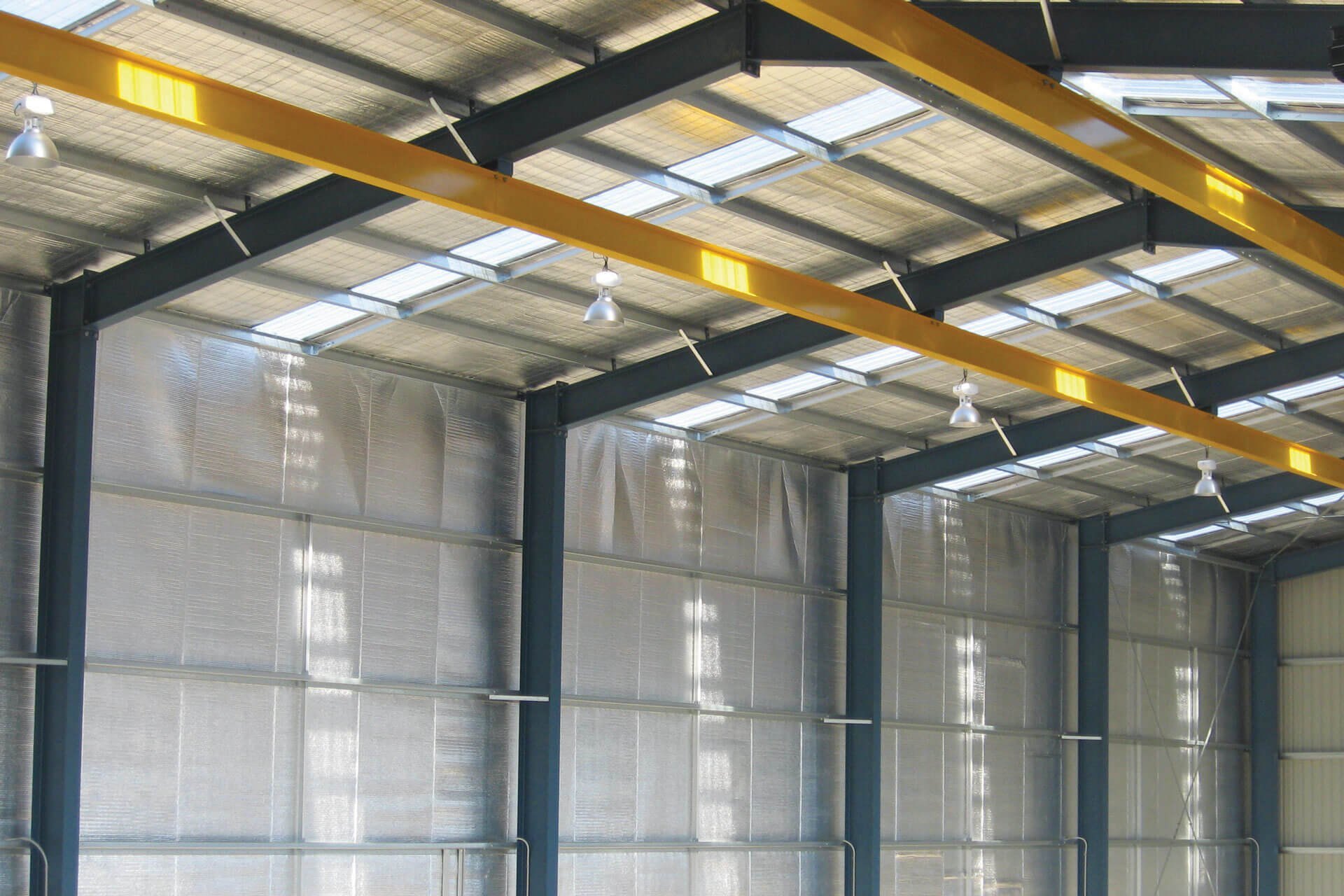
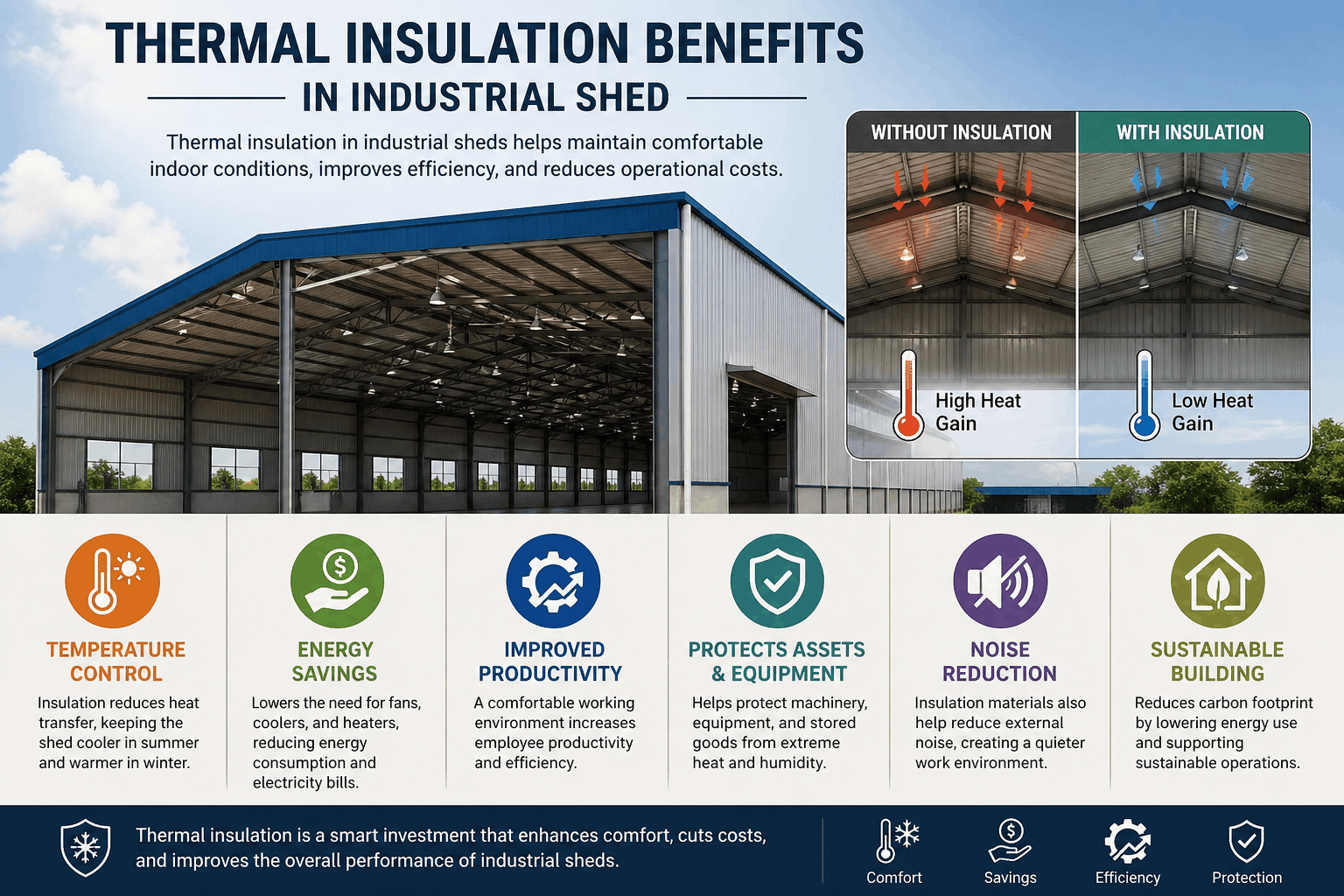
For making things, storing things, and other processes, industrial sheds are very important. But one of the biggest problems that businesses have to deal with, especially in hot places like India, is that sheds get too hot. This not only lowers worker productivity, but it also breaks down machines and raises energy costs. This is where heat insulation for industrial sheds plays a pivot role.
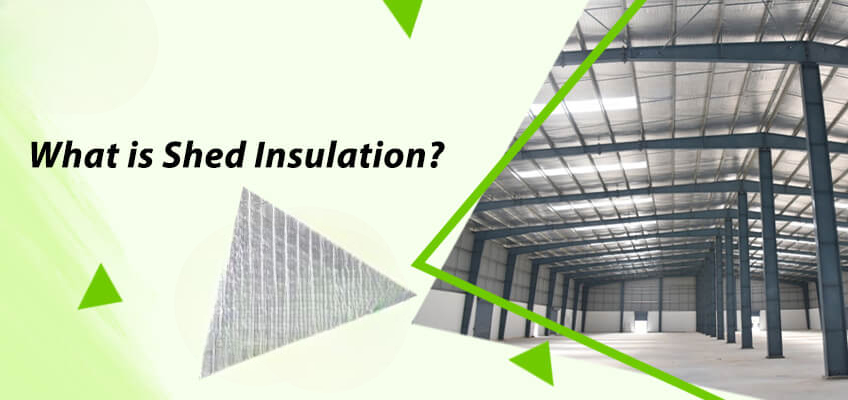
Most of the time, industrial sheds have metal roofs that soak up and hold heat from the sun. In the summer, the shed can get much hotter than the outside.
Installing the right insulation helps:
Picking the right insulation material is very important for good thermal control. Here are the most popular choices:
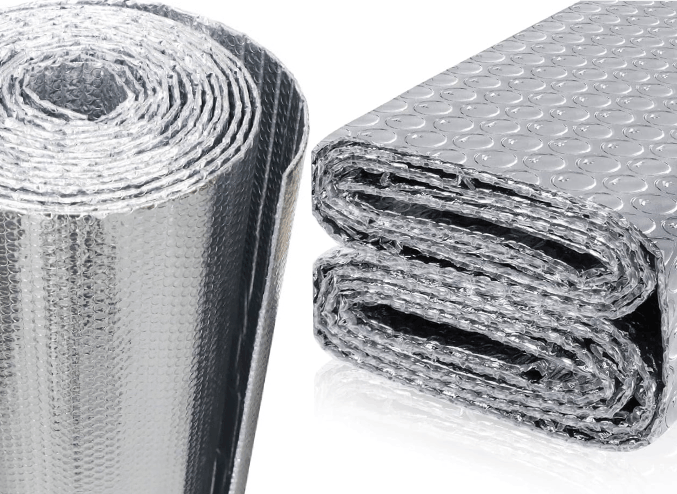
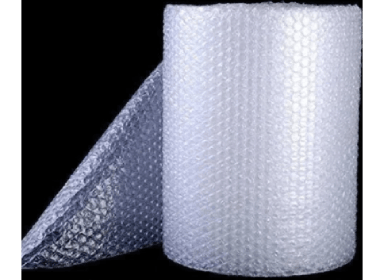
Air bubble insulation is one of the best and cheapest ways to keep heat in. It has several layers with air pockets that keep heat from moving through them.
Key features include:
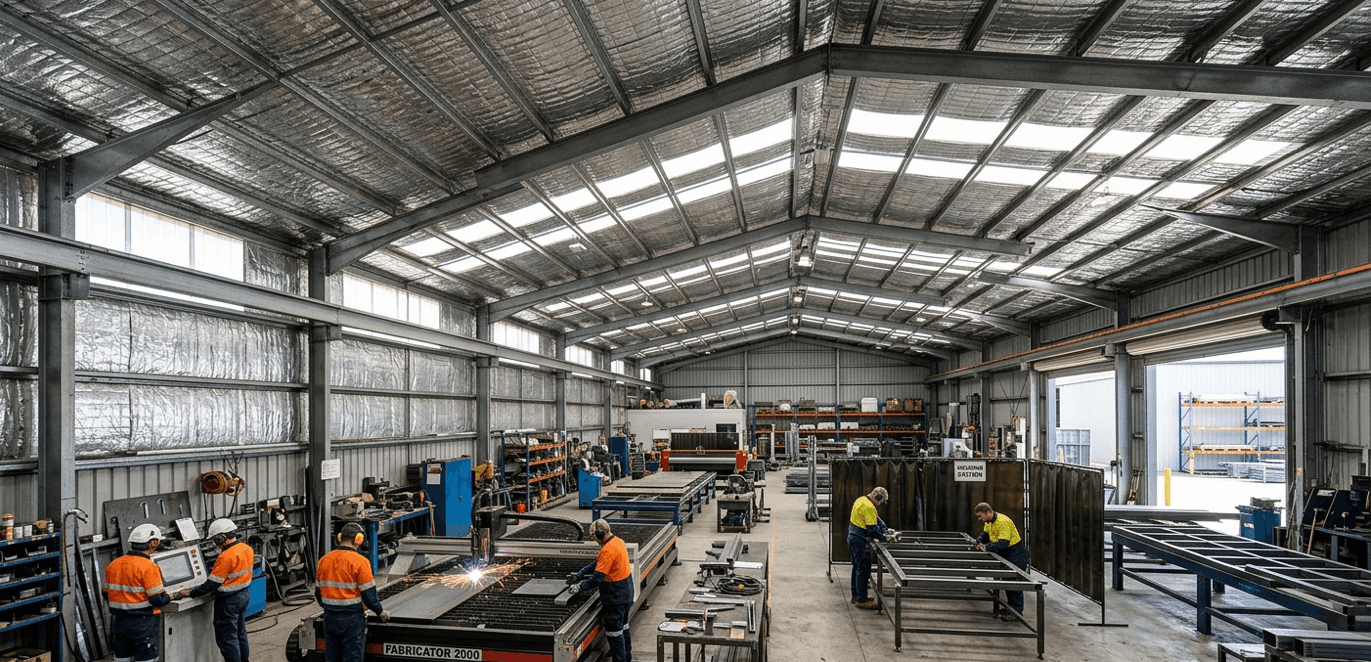
Reflective insulation uses layers of aluminium foil to bounce radiant heat away from the shed.
Key features include:
Fiberglass is a common type of insulation made from very thin glass fibres.
Key features include:
PUF insulation is very good at keeping heat out and is often used in factories
Key features include:
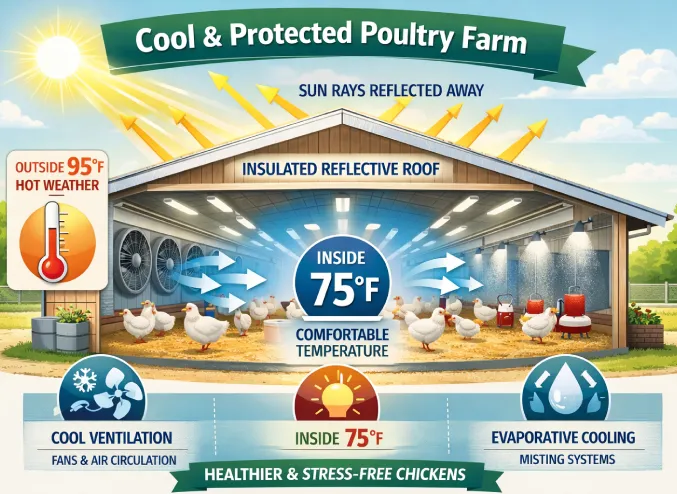
Heat insulation works by slowing down the transfer of heat through conduction, convection, and radiation. Reflective insulation materials bounce back solar radiation, and insulating layers slow down the flow of heat.
Insulation under the roof keeps the inside of the shed cooler, even in very hot or very cold weather.
To get the most out of your insulation, it should be put in the following places
People are starting to like air bubble insulation more because it works better and costs less. It is especially good for Indian weather, where high temperatures are common.
Some of the main benefits are:
There is no longer a choice when it comes to heat insulation for industrial sheds; it is a must. As temperatures rise and energy costs rise, buying high-quality insulation can make your home more comfortable, save you money, and make it more efficient.
The right solution, whether it's air bubble insulation, reflective foil, or more advanced materials like PUF, can make your industrial space more productive and energy-efficient.