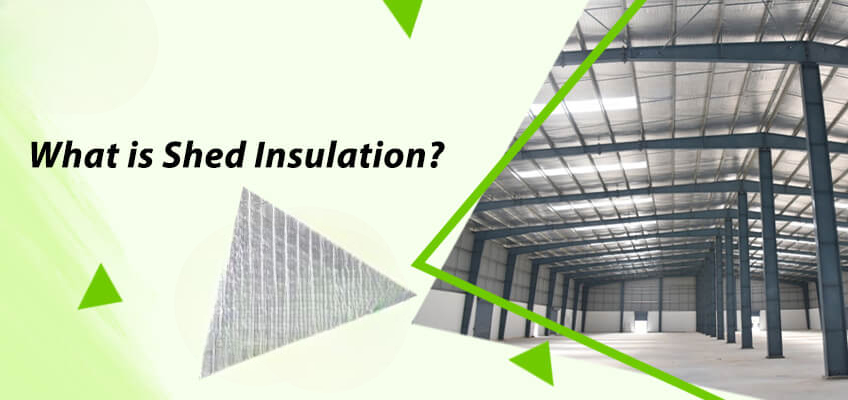
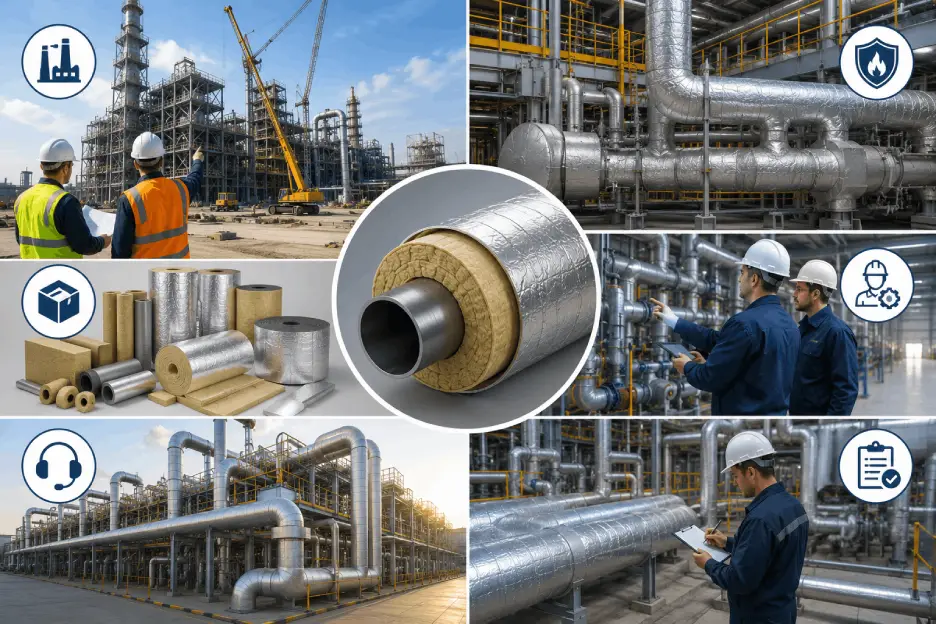
Managing a factory requires considerable operational expenses, and energy charges can be one of the highest. Regardless of whether your business involves the production of foodstuffs, chemicals, fabrics, or auto components, having the proper temperature in the factory is essential for efficiency, the quality of your products, the health and safety of your employees, and cutting costs. What is the single most important measure to be taken to resolve all these issues effectively? It’s adequate thermal insulation!
Kanpack Insulations has been able to assist hundreds of factories across the nation to lower their energy expenses by providing top-notch insulating services for a long time now. We have prepared this comprehensive guidebook to provide everything that you need to know concerning factory thermal insulation.
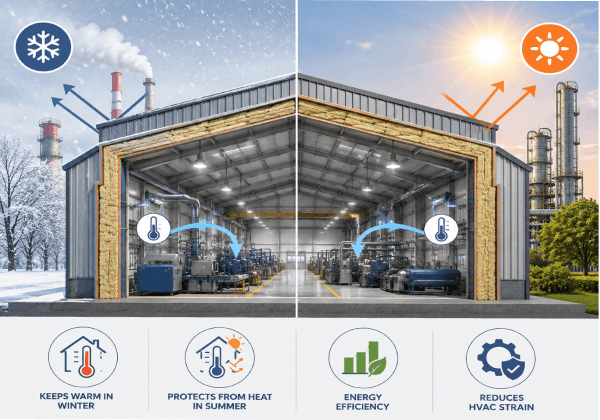
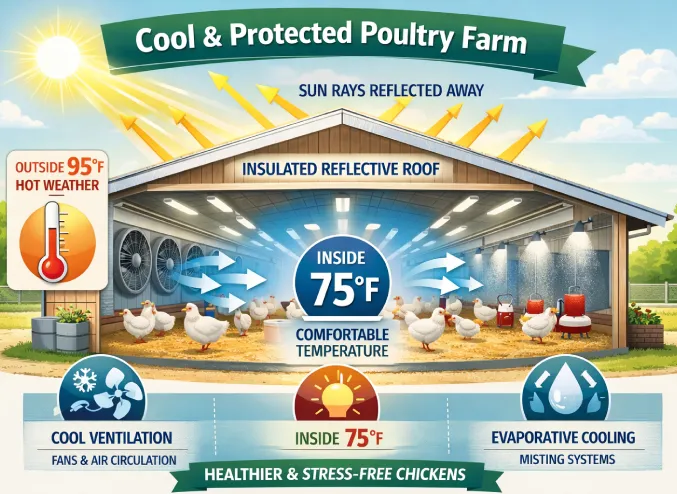
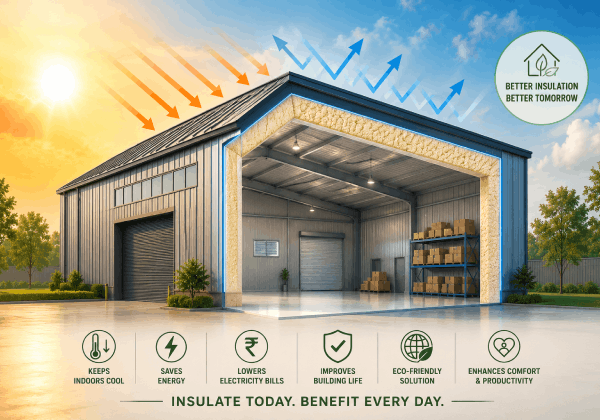
Thermal insulation refers to any material or system employed to decrease the amount of heat transfer between two surfaces, where one is warmer than the other. In a factory, thermal insulation helps keep the factory warm during winter while protecting it from external heat in summer to maintain the temperature inside without straining your HVAC systems.
The quality of the thermal insulation is determined by its R-value. This means that the higher the R-value of a material, the greater will be its capacity to resist heat transfer.
A factory building is vast, tall, spacious, with various forms of internal heat production. Consequently, the lack of thermal insulation makes it an extremely inefficient consumer of electricity. Here's why:
If a factory lacks good thermal insulation, then 40 percent of heating or cooling energy is lost through the walls, roof, and floor. Effective thermal insulation reduces this wastage.
High temperatures in factories hinder the efficiency of workers and make them prone to heat stroke or cold illnesses. An insulated factory helps ensure better temperature control within the factory premises and, thus, enhances the comfort level of the employees.
Temperature needs to be maintained for many manufacturing procedures. Some examples of such industries include food products, medicines, and electronic components. Inadequate insulation may lead to issues with the quality of goods produced.
Energy consumption in industries leads to an increase in the carbon footprint of the companies. Through proper insulation, factories will minimize their energy consumption and, thus, become less harmful to the environment.
Moisture accumulation is a leading factor causing deterioration of the infrastructure of factories. Proper insulation protects the structural integrity of factories.
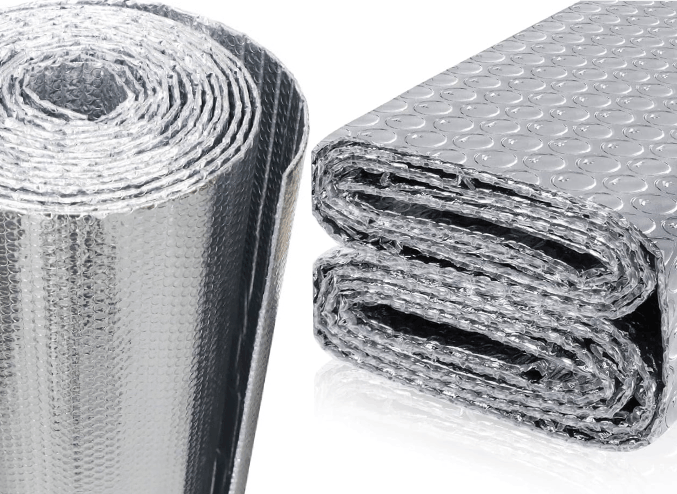
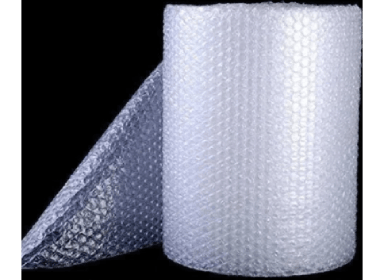
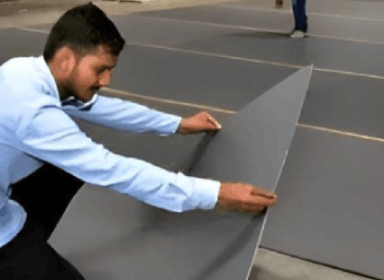
Your choice of insulation will be dependent on various parameters of your factory such as its construction, intended use, budget, etc. Below is the list of the most commonly used insulations in industry:
A good insulation plan for a factory would include covering all forms of heat flow:
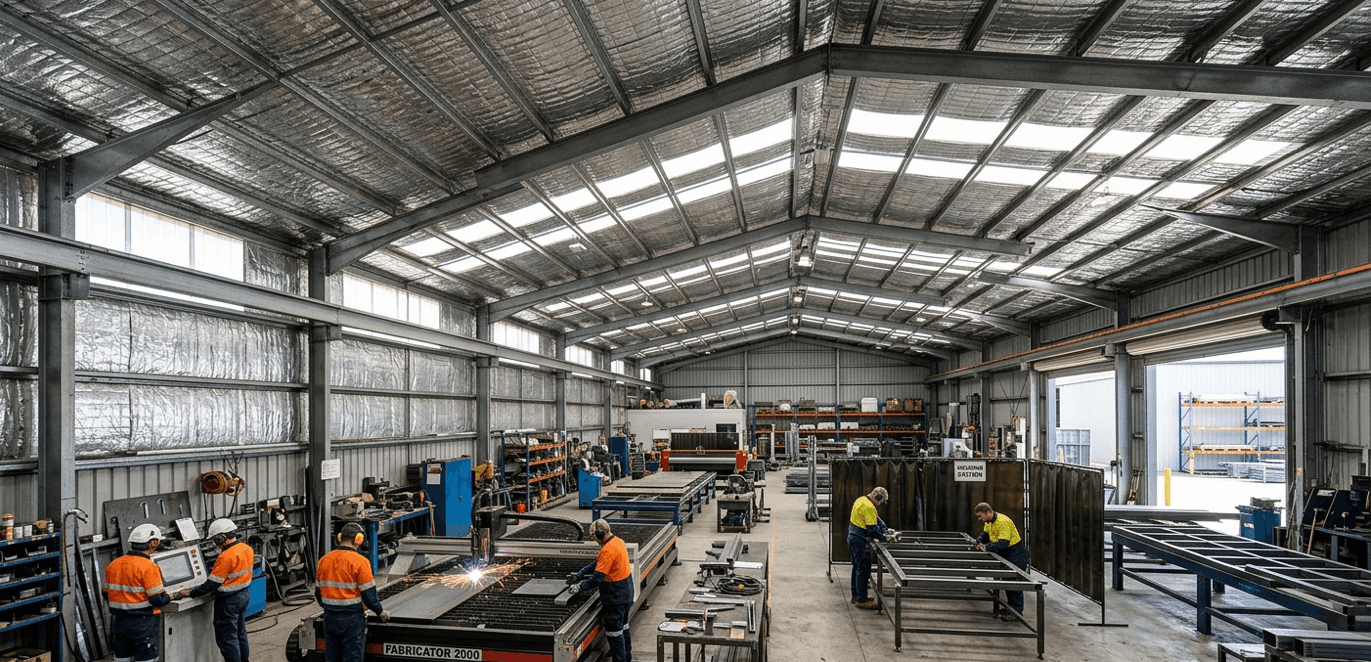
The roof is the greatest source of heat flow in the majority of factories. Insulation is needed above (cold roof) or below (warm roof).
Walls need to be insulated to stop heat flowing through laterally.
Heat flow through footing floors may be stopped by insulating them before screeding.
Thermal bridging at doors and windows can be avoided with double glazing and insulation.
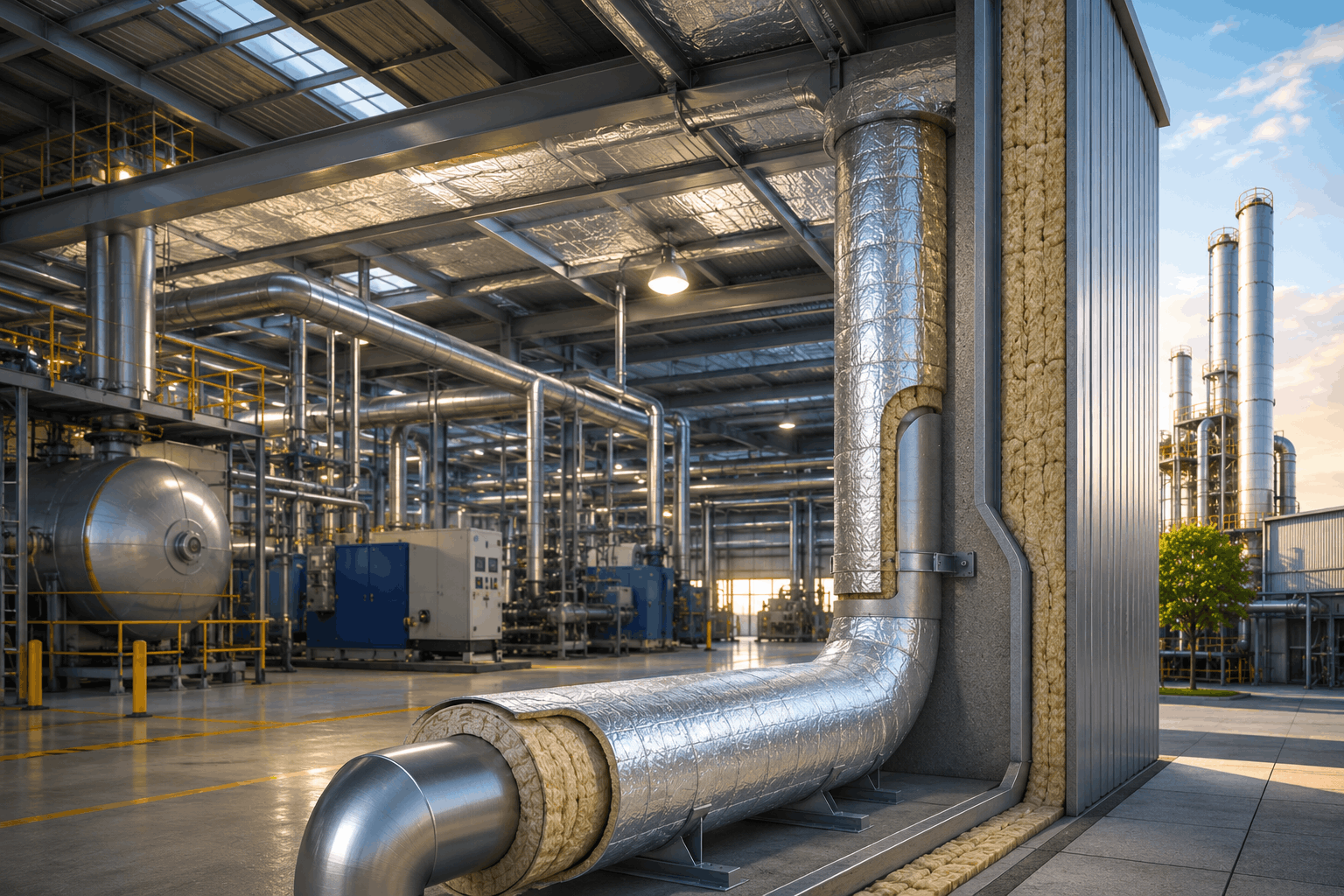
Lagging of pipes and ducting in the factory that are hot or cold will reduce heat transfer.
Intermediate factory floors also need attention to avoid heat strata in the building.
But not all insulation products are the same, nor are all the installation crews either. Some key points you should consider when choosing an insulation contractor for your factory are:
Kanpack Insulations, www.kanpackinsultions.com, is a company which combines decades of experience in the field. We perform a complete survey of your factory in order to define your exact thermal problems and offer you the best available solution at minimal cost.
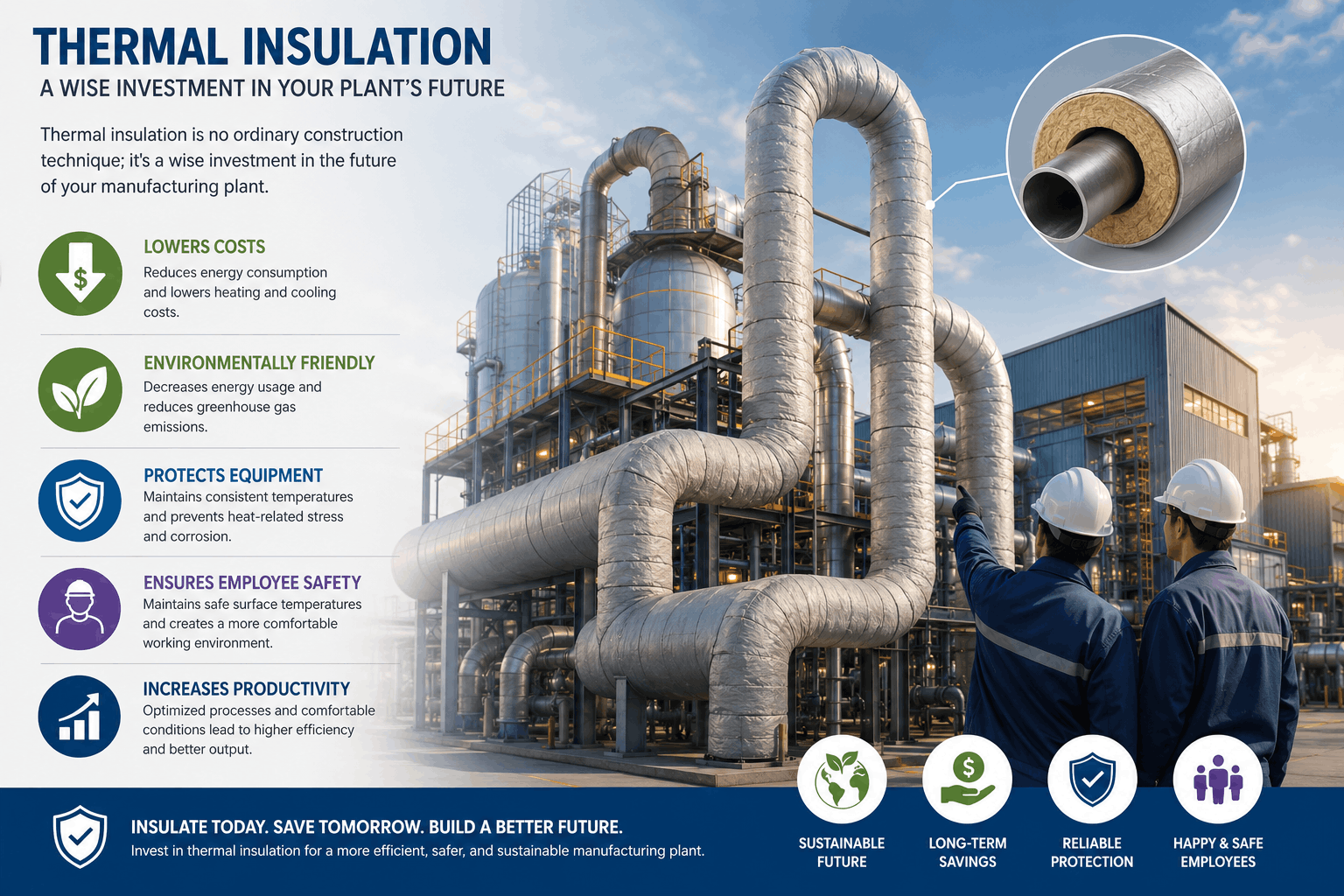
Thermal insulation is no ordinary construction technique; it's a wise investment in the future of your manufacturing plant. From lowering costs to being environmentally friendly and protecting your employees, there are plenty of advantages to be gained from thermal insulation.
Regardless of whether you are constructing a new building or upgrading an existing one, this is your chance to do something about it. Your lack of proper thermal insulation might already be costing you a lot of money every day.
Wise up about your hermal insulation needs. Contact the professionals at Kanpack Insulations today for a free consultation. Find out more at www.kanpackinsultions.com