K A N P A C K

Choosing the Right Aluminium Foil Insulation Sheet for Your Roof and Building

Keeping a building comfortable during hot summers can be challenging, especially in India, where metal roofs, tin sheds, factories, warehouses, and commercial buildings can become extremely hot under direct sunlight. This heat often makes indoor spaces uncomfortable and can increase the need for air conditioning.

Choosing the right insulation material can help manage heat transfer and improve indoor comfort. Aluminium foil insulation is one option used in residential, commercial, and industrial buildings. It combines a reflective surface with a suitable core material to help reduce radiant heat transfer when installed correctly.

However, not every insulation sheet offers the same performance. Factors such as material composition, thickness, air gaps, installation methods, and the building's structure all matter. Understanding these differences can help you select an aluminium foil insulation sheet that suits your roof and building requirements.

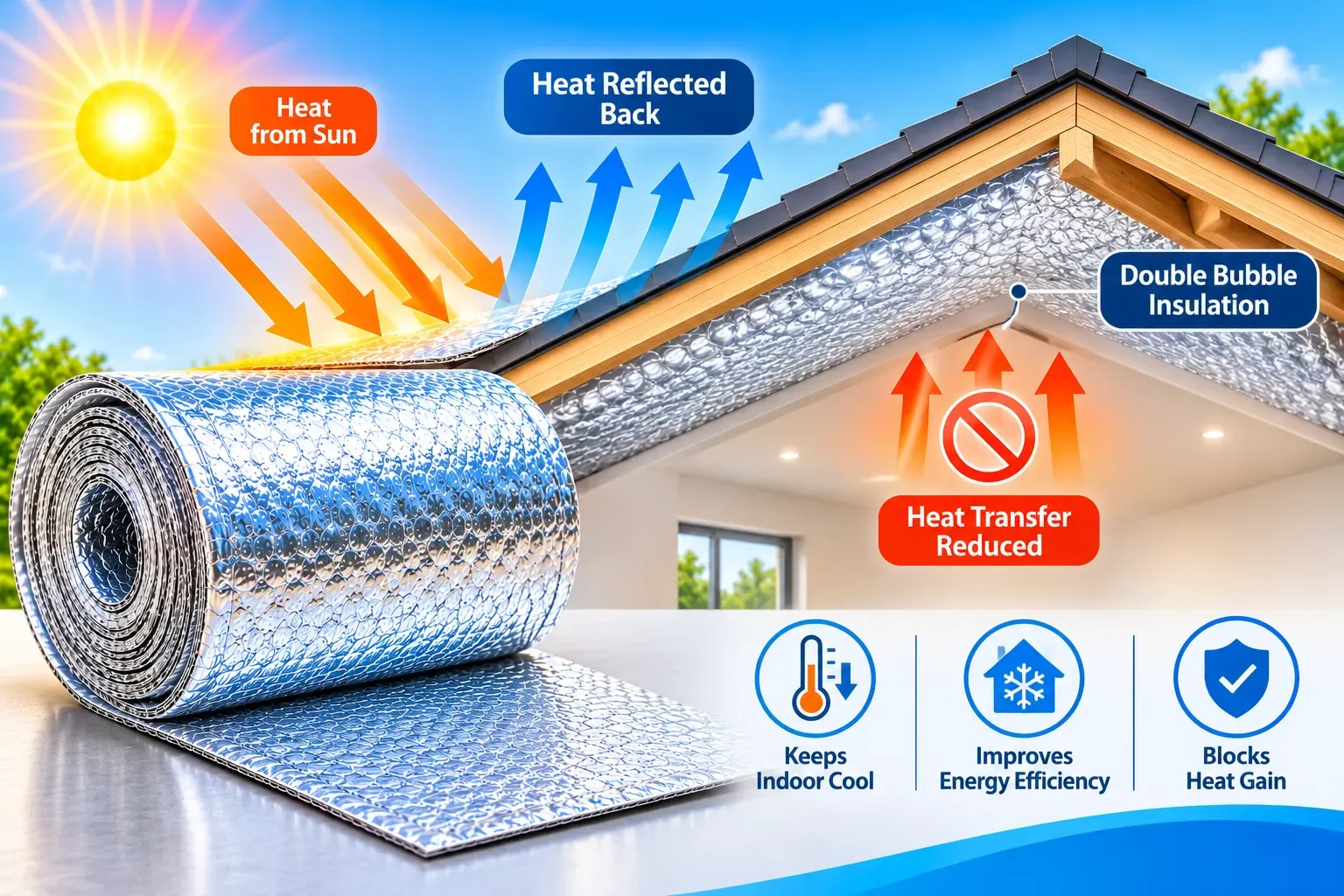
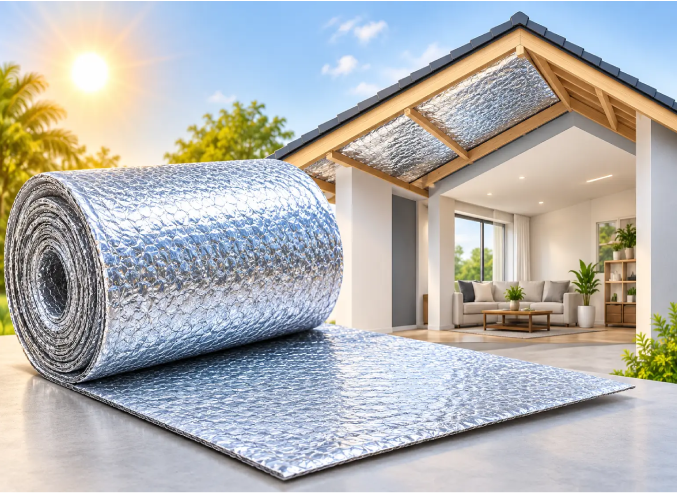
Reflective insulation house cutaway

What Is Aluminium Foil Insulation Material?

Aluminium foil insulation material is designed to help control heat transfer through reflective surfaces and, depending on the product, an insulating core. It is commonly used in metal-roofed buildings, industrial sheds, warehouses, and other spaces exposed to direct sunlight.

Unlike conventional insulation materials that mainly slow heat transfer through their thickness, reflective insulation works primarily by reflecting radiant heat away from the building when installed with the appropriate air space.

The overall performance depends on the type of product used. Some materials combine aluminium foil with polyethylene air bubbles, while others use foam or different supporting layers.

How Does Reflective Insulation (Foil Insulation) Work?

Reflective insulation uses a surface with low emissivity to reduce the amount of radiant heat transferred across an air space. When sunlight heats a metal roof, the roof can transfer heat towards the space underneath it. A properly installed reflective insulation system can help reduce this transfer.

For example, in a factory with a metal roof, an aluminium foil insulation sheet installed beneath the roofing can help reduce radiant heat entering the building. The reflective surface works most effectively when it faces an appropriate air gap rather than being pressed directly against another material.

It is important to remember that reflective insulation does not eliminate all heat transfer. Conduction, convection, ventilation, and the building's design also influence indoor temperatures.

What Is Composite Aluminium Foil Insulation Material?

Composite aluminium foil insulation material combines a reflective foil layer with another material to create a practical insulation product. Depending on its design, the core may consist of polyethylene air bubbles, foam, or another suitable substrate.

The foil layer helps manage radiant heat transfer, while the core can provide additional resistance to heat flow and contribute to the product's structure.

Composite insulation is available in different constructions to meet different building requirements. Before purchasing, check the material composition, thickness, facing type, and technical specifications instead of assuming that all aluminium foil insulation products perform equally.
Understanding Heat Insulation Foils and Their Applications.

Heat insulation foils are used in several settings where radiant heat is a concern. Common applications include:

  •   Metal roofs and tin sheds.
  •   Factories and industrial warehouses.
  •   Commercial buildings and storage facilities.
  •   Garages and workshops.
  •   Suitable wall and ceiling insulation systems.
  •   Selected agricultural and utility buildings.
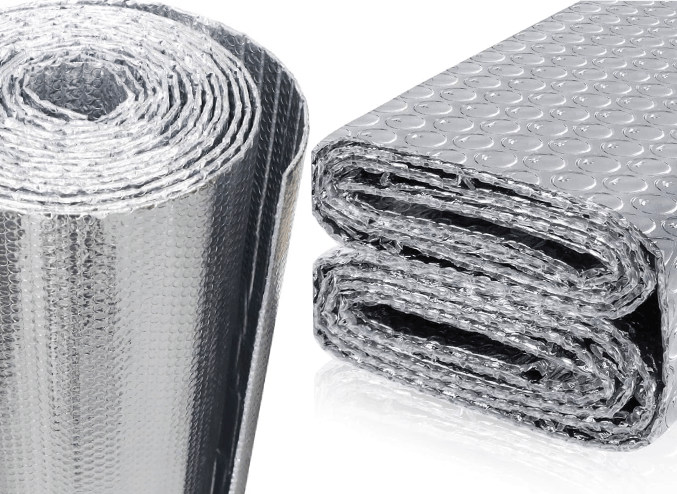
Reflective foil insulation applications

The correct product depends on the building's exposure to heat, the roofing structure, available installation space, and local conditions. In some applications, reflective foil insulation may be combined with other insulation materials to achieve the required thermal performance.

img
Double bubble insulation r value guide

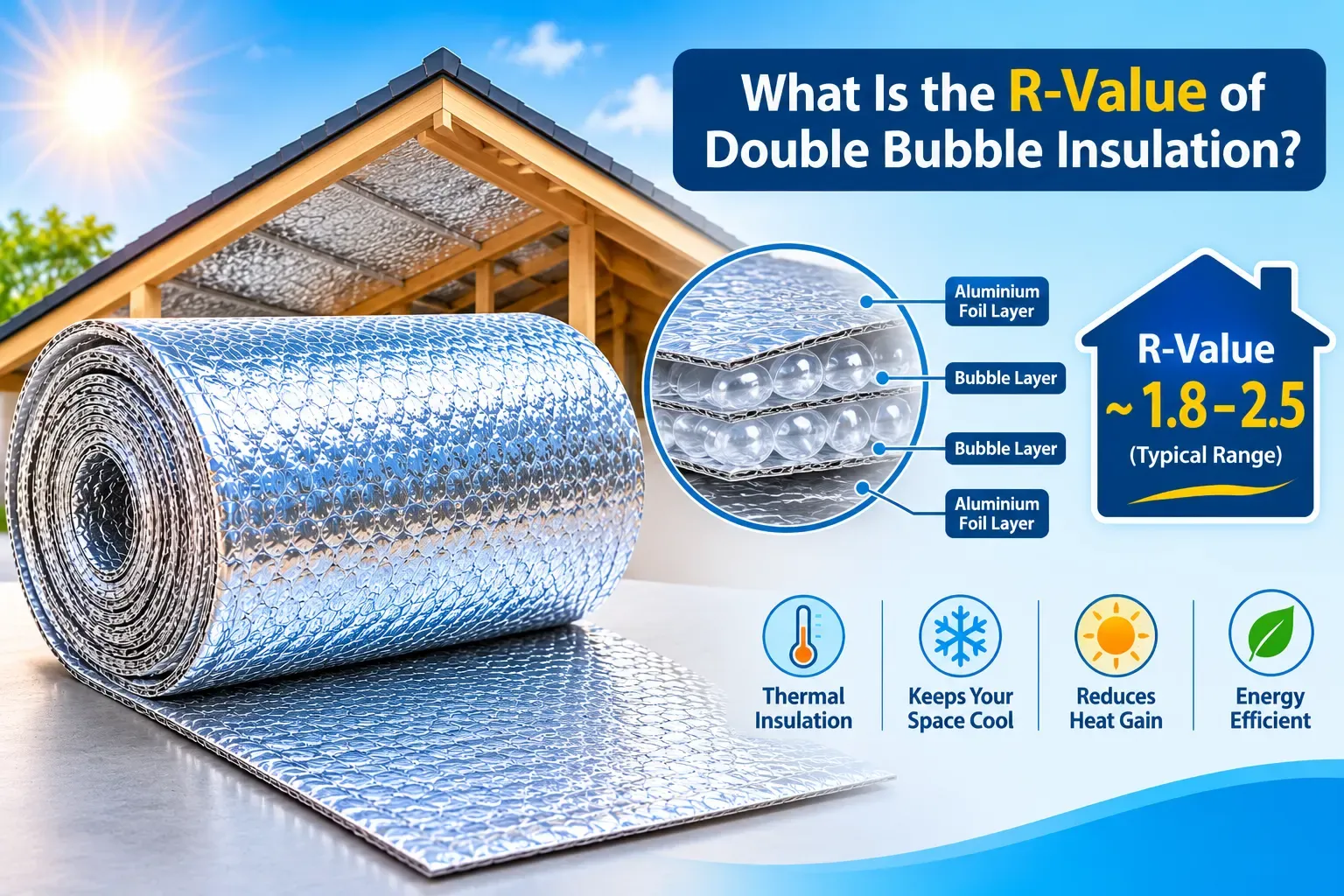
What Is the R-Value of Double Bubble Insulation?

The R-value measures how well a material resists heat flow. In general, a higher R-value indicates greater resistance to conductive heat transfer under the conditions used for testing.

Double bubble insulation usually consists of two layers of air bubbles enclosed between reflective facings or within a similar composite structure. It is commonly considered for roofs and buildings that experience substantial radiant heat from sunlight.

However, there is no single R-value that applies to every double bubble insulation product. The result depends on the specific construction, thickness, test method, and installation conditions.

Double insulation reflect heat stay cool

How Does Double Bubble Insulation Help Reduce Heat Transfer?

Double bubble insulation combines enclosed air spaces with reflective surfaces. The air spaces can contribute to resistance to heat flow, while the reflective surfaces help reduce radiant heat transfer when positioned correctly.

This combination can be useful beneath metal roofing, where solar heating can make indoor areas uncomfortable.

The actual benefit depends on how the product is installed. Air gaps, the direction of the reflective surface, sealing details, and the surrounding roof structure can all affect the outcome.

•

What Factors Affect the R-Value of Double Bubble Insulation?

Several factors influence insulation performance:

  •   Material construction - The type and arrangement of the bubble layers and reflective facings matter.
  •   Thickness - Greater thickness may influence thermal resistance, but thickness alone does not establish the R-value.
  •   Air gaps - Reflective surfaces generally need a suitable adjacent air space to provide their intended radiant heat benefit.
  •   Installation quality - Gaps, compression, damage, and poorly finished joints can affect performance.
  •   Testing conditions - Published values may differ depending on the test method and whether the value represents the material alone or a complete assembly.

For accurate comparisons, ask the manufacturer for tested thermal performance data and clarify whether the stated R-value applies to the insulation product or the complete installed system.

Icon

Is Double Bubble Insulation Suitable for Roofs and Industrial Buildings?

Double bubble insulation can be suitable for many metal-roofed buildings, including factories, warehouses, workshops, and tin sheds. These structures can absorb considerable solar heat, particularly when ventilation and other heat-control measures are limited.

Before choosing a product, consider the roof's temperature, the required level of thermal comfort, condensation risks, moisture exposure, and any applicable fire-safety requirements.

For buildings that require a specific thermal resistance, compare tested R-values and consider whether additional insulation or ventilation is necessary.

Icon

Why Does Proper Installation Matter for Insulation Performance?

Even a suitable insulation material may not perform as expected if it is installed incorrectly. Reflective insulation needs the appropriate air gap, where specified, to work as intended.

Installers should follow the manufacturer's guidance for orientation, fixing, joint treatment, and compatibility with the roof structure. The installation should also account for moisture management, condensation, and safe clearances around electrical equipment or heat-producing components.

Proper installation helps the insulation system deliver more consistent results over time.

Types of Aluminium Foil Insulation Sheets

An aluminium foil insulation sheet is available in several forms, each designed for different applications. Common options include single-bubble insulation, double-bubble insulation, and foil-faced composite products made with foam or other supporting materials.

Choosing the right type involves more than comparing prices. The product should suit the building's thermal requirements, installation conditions, and expected service environment.

What Is an Aluminium Foil Insulation Sheet?

An aluminium foil insulation sheet is a sheet-based material that uses a reflective aluminium facing, often combined with a core material. Depending on its construction, it may be flexible, lightweight, and easy to cut to the required dimensions.

These sheets are commonly considered for metal roofing, sheds, warehouses, and selected wall or ceiling applications.

When comparing products, check whether the facing is aluminium foil or a metallised film, what the core contains, and whether the manufacturer provides technical specifications for thermal performance.

bg

How Does an Aluminium Foil Insulation Sheet Help Reduce Radiant Heat?

The reflective surface helps reduce radiant heat transfer when it faces a suitable air space. This can be particularly useful in buildings where the roof receives direct sunlight throughout the day.

For example, a properly installed reflective insulation sheet beneath a metal roof can help reduce the amount of radiant heat reaching the indoor space. However, the final result also depends on the roof design, ventilation, air gaps, and other insulation layers.

Reflective insulation should therefore be viewed as one part of an overall heat-management strategy rather than a complete solution for every building.

bg

What Is an Aluminium Bubble Foil Insulation Sheet?

An aluminium bubble foil insulation sheet combines a reflective foil facing with a core containing air bubbles. The reflective surface helps manage radiant heat, while the bubble layer contributes to the product's structure and may provide additional thermal resistance.

These sheets are often used in applications where a lightweight and flexible insulation material is preferred.

Before selecting an aluminium bubble foil insulation sheet, review its construction, thickness, dimensions, installation recommendations, and verified thermal performance. Products that look similar may have different materials and performance characteristics.

bg

Aluminium Bubble Foil Insulation Sheet: 4mm to 20mm Options

Aluminium bubble foil insulation products may be offered in different thicknesses to suit different requirements. Where a supplier lists options ranging from 4mm to 20mm, confirm that these are actual available specifications for the particular product.

A thicker product is not automatically the best option. The type of core, foil facing, bubble construction, and intended installation all influence performance.

When comparing 4mm to 20mm insulation sheets, ask for:

• Actual product thickness and dimensional tolerances

• Core and facing material details

• Tested thermal performance

• Installation instructions and air-gap requirements

• Moisture, durability, and fire-performance information, where relevant

These details make it easier to compare products based on suitability rather than thickness alone.

How to Choose the Right Insulation Sheet for Your Building

Start by identifying the main problem you want to address. A metal-roofed factory may need help controlling radiant heat, while another building may require greater resistance to heat flow throughout the roof assembly.

Consider the following points:

1. Building Type: Identify whether the insulation is intended for a house, warehouse, factory, tin shed, or commercial property.

2. Roof Construction: Check the roofing material, available space, support structure, and installation access.

3. Product Composition: Compare single-bubble, double-bubble, foam-based, and other composite materials.

4. Thermal Performance: Request tested specifications rather than relying only on product descriptions.

5. Installation Requirements: Confirm whether an air gap, special fixing method, or additional insulation is required.

6. Long-Term Suitability: Consider moisture exposure, durability, maintenance, and applicable safety requirements.

Can You Insulate a Roof with Aluminium Foil?

Yes. Purpose-made aluminium foil insulation products can be used beneath suitable roof systems to help reduce radiant heat transfer. They are particularly relevant to metal roofs, which can become very hot after prolonged exposure to sunlight. However, ordinary kitchen aluminium foil should not be treated as a substitute for a purpose-designed building insulation product. Roofing applications require materials with suitable construction, durability, and installation guidance.

How Is Aluminium Foil Insulation Used Under Metal Roofs?

Reflective insulation is commonly installed beneath metal roofing, following the manufacturer's instructions. Depending on the roof design, the material may be fixed to supporting members or incorporated into a larger roofing assembly.

Where required, an air gap should be maintained between the reflective surface and the adjacent building material. The installer should also address joints, penetrations, moisture movement, and ventilation.

The best installation method depends on the roof's construction and the specific insulation product. A qualified installer can help determine the appropriate arrangement.

Is Aluminium Foil Insulation Suitable for Tin Sheds and Industrial Buildings?

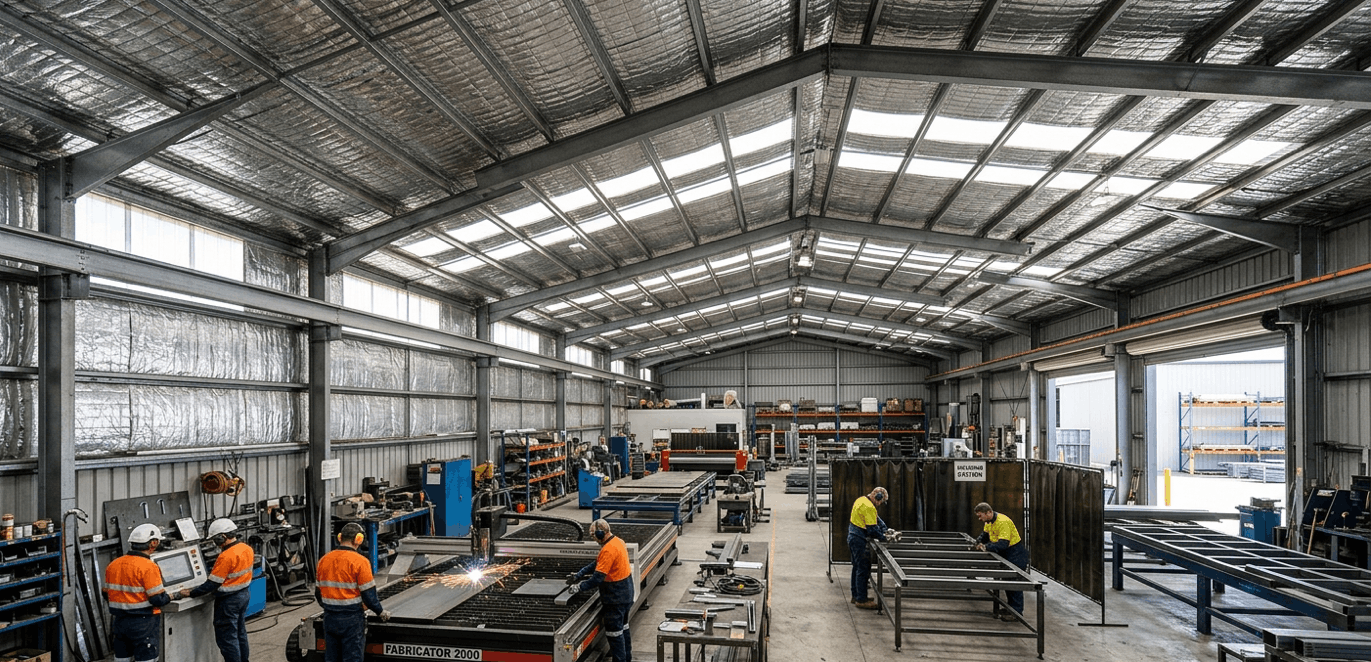
Aluminium foil insulation can be a practical option for suitable tin sheds, workshops, factories, and warehouses. These buildings often have metal roofs that heat up quickly under direct sunlight.

The insulation may help reduce radiant heat transfer and improve indoor comfort. However, results vary with the building's size, roof design, ventilation, occupancy, and insulation system.

For industrial applications, also consider fire safety, condensation control, and compatibility with the existing roof. Larger facilities may benefit from combining insulation with effective ventilation and other measures to manage indoor heat.

Is Thicker Aluminium Foil Better for Roof Insulation?

Not necessarily. The thickness of the complete insulation sheet is different from the thickness of its aluminium facing, and neither measurement alone determines the system's overall performance.

A thicker composite product may contain a different core or additional air-bubble layers. These differences can influence thermal resistance, but the actual benefit must be assessed using reliable product specifications.

When choosing roof insulation, compare the complete product construction, tested performance, installation requirements, and suitability for the roof. Do not select a product based on thickness alone.

What Should You Consider Before Installing Roof Insulation?

Before installation, check the roof's condition, the expected heat exposure, the available installation space, and the building's ventilation.

It is also important to consider condensation. In some roof assemblies, warm, moist air can reach a cooler surface and form condensation if moisture movement is not properly managed.

Choose a product suitable for the intended application and follow its installation instructions. For industrial and commercial buildings, check the relevant fire-safety requirements and consult a qualified professional when necessary.

What Are the 6 Best Advantages of Aluminium Foil Insulation?

Aluminium foil insulation offers several potential benefits when the product is selected and installed correctly. The advantages vary according to the material construction and the conditions in which it is used.

Helps Reduce Radiant Heat Transfer

The reflective facing can help reduce radiant heat transfer across a suitable air gap. This makes purpose-designed foil insulation useful in applications where roofs receive direct sunlight.

Supports Indoor Temperature Comfort

By helping limit radiant heat entering a building, insulation can contribute to more comfortable indoor conditions. The degree of improvement depends on the roof design, ventilation, and other thermal-control measures.

Lightweight and Easy to Handle

Many foil-faced bubble insulation products are lightweight and flexible. This can make them easier to transport, cut, position, and install than some heavier insulation systems.
The actual handling characteristics depend on the product's size, construction, and thickness.

Available in Different Thicknesses and Structures

Aluminium foil insulation is available in different constructions, including single-bubble, double-bubble, and other composite designs. This range allows buyers to compare options for different roof and building requirements.
However, buyers should check the manufacturer's specifications instead of assuming that a particular thickness guarantees a specific level of insulation.

Can Help Reduce Cooling Requirements When Properly Installed

Reducing heat entering a building may lower the demand for air conditioning in some circumstances. The potential energy savings depend on the climate, building design, insulation performance, ventilation, and cooling system.
Actual savings should not be assumed without considering the conditions of the specific building.

Suitable for Various Residential, Commercial and Industrial Applications

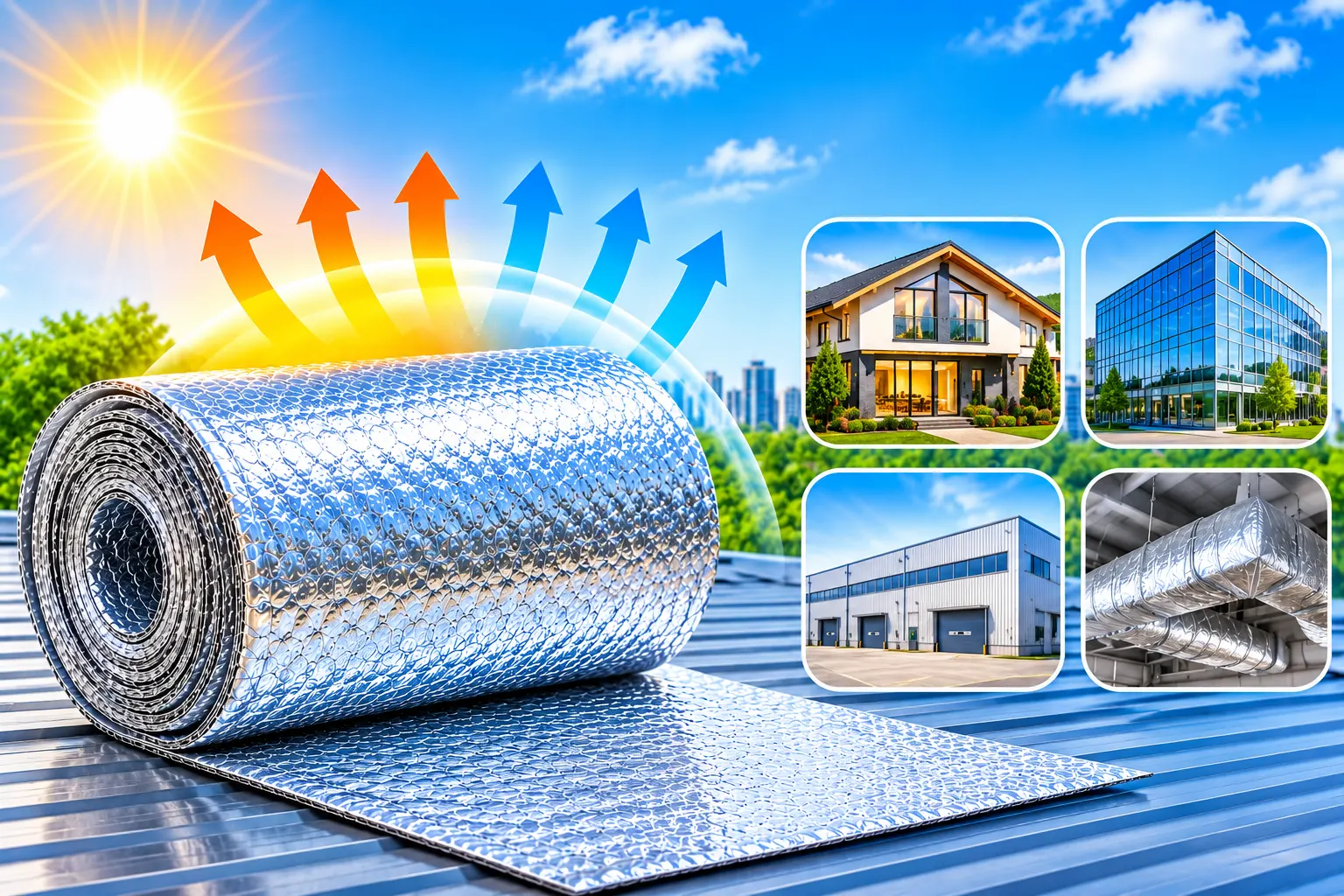
Depending on the product's specifications, aluminium foil insulation can be used in houses, commercial buildings, factories, warehouses, workshops, and metal sheds.
The chosen material should meet the application's thermal, moisture, durability, and safety requirements.


Important: Actual performance depends on the insulation structure, installation method, air gaps, and building conditions. For the best results, uses verified technical data and follow the manufacturer's recommendations.

How to Choose the Right Aluminium Foil Insulation Sheet

Choosing an aluminium foil insulation sheet becomes easier when you understand the requirements of your building. Instead of focusing only on price or thickness, compare the product's materials, thermal performance, installation method, and suitability for the roof.

Which Aluminium Foil Insulation Material Is Suitable for Your Roof?

For a metal roof exposed to direct sunlight, a purpose-designed reflective bubble insulation sheet may be worth considering. The foil surface can help reduce radiant heat transfer when installed with the required air gap.

For other buildings, a foam-based composite or a combination of insulation materials may be more suitable.

Consider the building's climate, roof design, moisture conditions, ventilation, and required thermal resistance before making a decision. The most appropriate material is the one that meets the project's actual requirements.

Should You Choose Single-Bubble or Double-Bubble Insulation?

Single-bubble insulation generally contains one layer of air bubbles, while double-bubble insulation uses two bubble layers or a corresponding multi-layer construction.

The additional layer can affect the product's structure and thermal performance, but it does not automatically mean that every double-bubble product will outperform every single-bubble product.

Compare tested thermal data, material construction, installation requirements, and cost. This will help you choose the option that provides suitable

How Do Thickness and Material Composition Affect Performance?

Thickness can influence insulation performance, but the composition of the material is equally important. A sheet made with a different core, facing, or layer arrangement may perform differently even when its overall thickness is similar.

The reflective surface also needs the appropriate installation conditions to reduce radiant heat transfer effectively.

Before purchasing, ask the supplier for technical data, including the product's actual thickness, construction, thermal performance, and recommended installation method.

Is a 4mm to 20mm Aluminium Bubble Foil Insulation Sheet Right for Your Project?

A product within this thickness range may be suitable for some projects, but the correct choice depends on the building and the product's verified specifications.

For example, a small workshop and a large industrial warehouse may have different thermal requirements. The required insulation performance, roof structure, budget, and installation method should guide the selection.

Ask the supplier which thicknesses are actually available and request technical information for the exact product. This helps prevent confusion between overall sheet thickness, bubble-layer dimensions, and the thickness of the foil facing.

Choosing an Aluminium Foil Insulation Manufacturer in Sikandra, Agra

Selecting a reliable manufacturer or supplier is an important part of buying insulation material. A good supplier should be able to explain the product's construction, intended applications, available sizes, and installation requirements.
If you are sourcing insulation in Sikandra, Agra, or from another part of India, compare suppliers based on product quality, technical support, supply capacity, and transparent specifications.

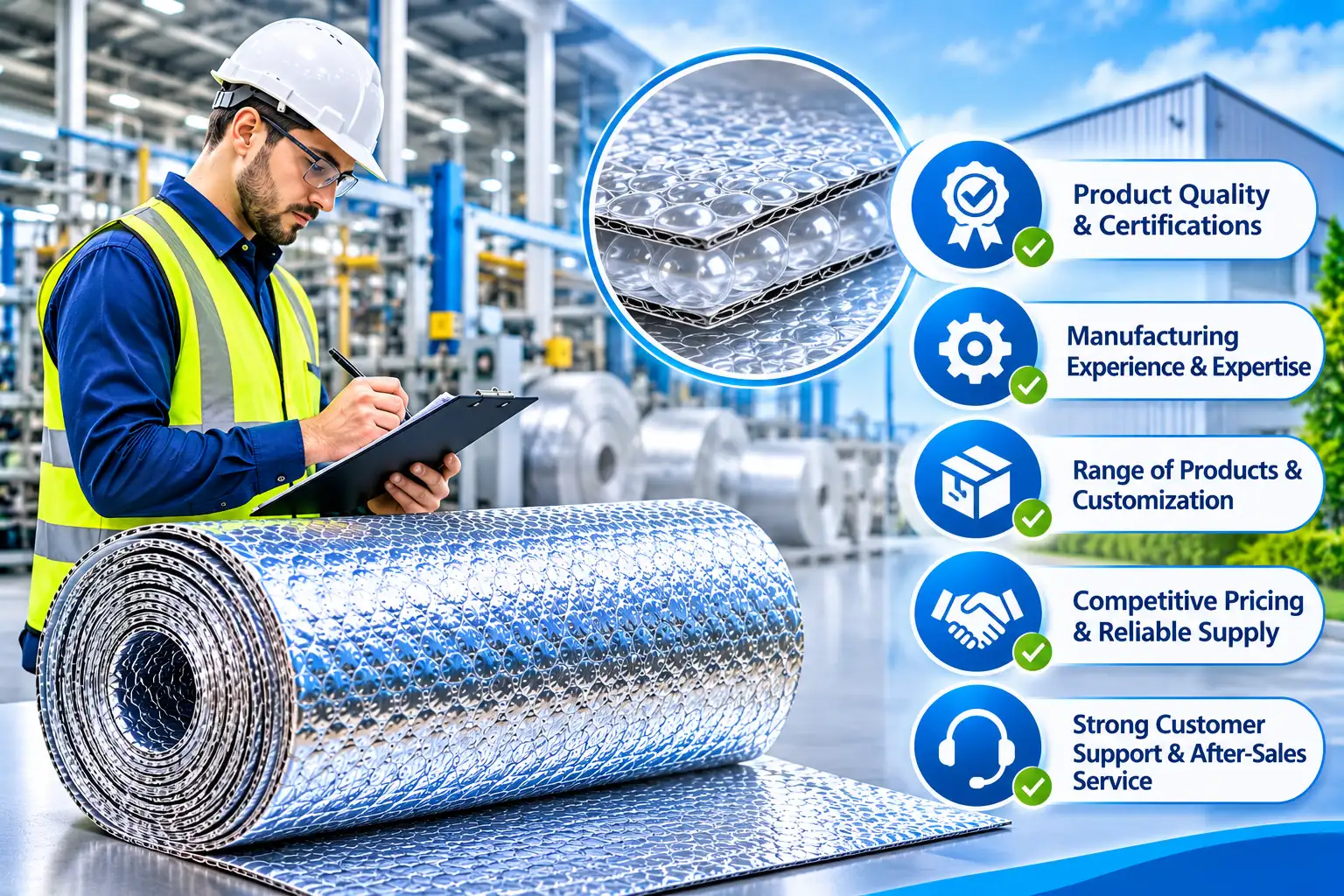
Quality driven aluminium foil insulation manufacturing

What Should You Look for in an Aluminium Foil Insulation Manufacturer?

Look for a manufacturer that provides clear information about its insulation products. This should include the core material, facing type, available thicknesses, dimensions, and relevant thermal-performance data.
You should also check whether the supplier can meet your project requirements and provide consistent product specifications for repeat orders.
Other useful considerations include packaging, delivery arrangements, quality-control practices, and technical support.


Aluminium foil insulation global supply guide

How to Choose a Reliable Aluminium Foil Insulation Sheet Exporter and Trader

When purchasing from an exporter or trader, ask for detailed product descriptions and documentation before placing an order. Confirm that the product supplied matches the quoted specifications.
For export orders, consider packaging requirements, shipping arrangements, documentation, delivery timelines, and the standards applicable in the destination market.
It is also sensible to request samples when possible, especially when the insulation is intended for a large project or recurring supply.

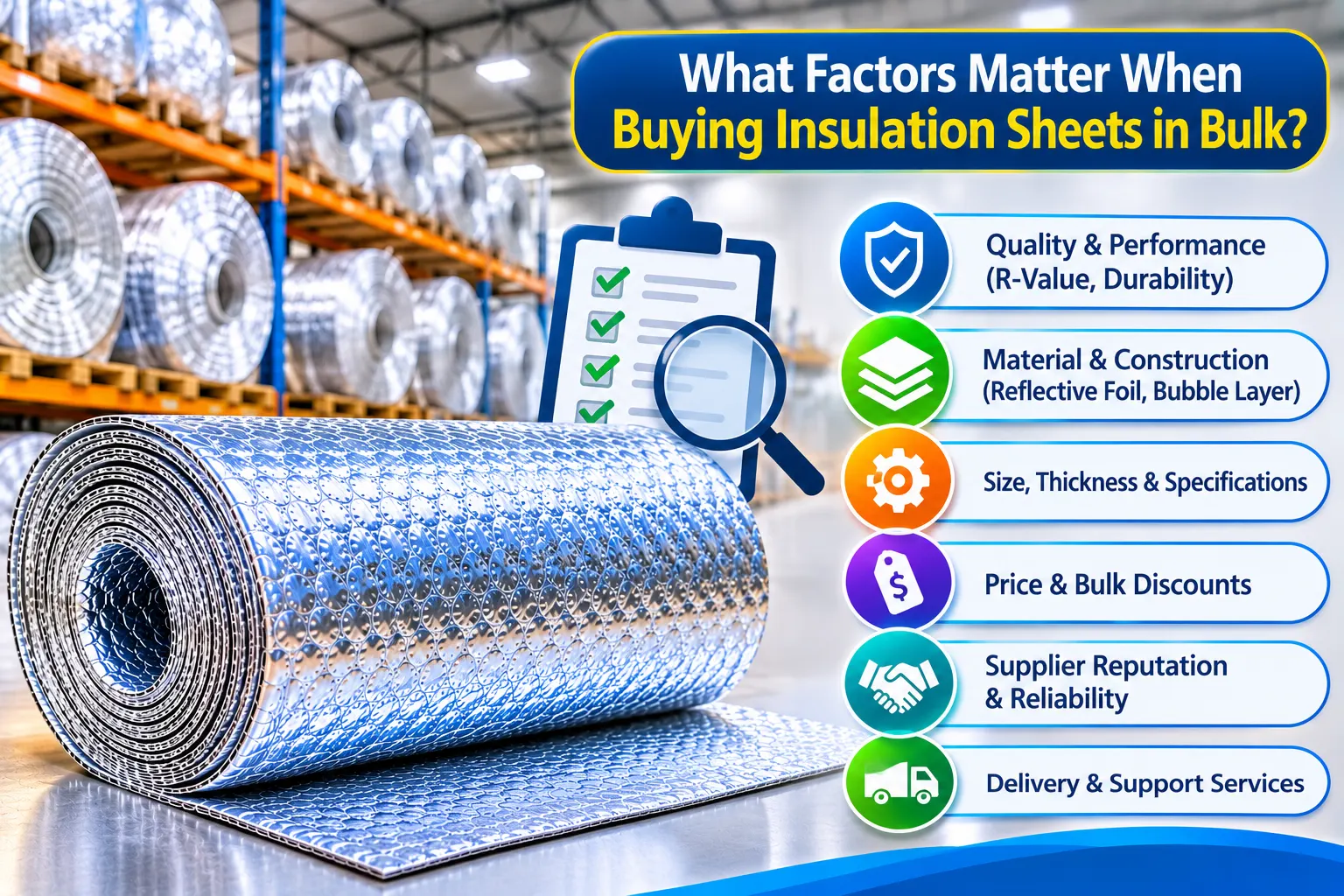
What Factors Matter When Buying Insulation Sheets in Bulk?

Bulk buyers should look beyond the price per sheet. Product consistency, roll or sheet dimensions, material specifications, availability, and delivery schedules can all affect the overall value of an order

Before confirming a bulk purchase, clarify:

  •    The exact product construction and specifications.
  •    Available sizes and thicknesses.
  •    Minimum order quantities, if applicable.
  •    Quality checks and technical documentation.
  •    Packaging and transport arrangements.
  •    After-sales communication and supply support.
Bulk insulation Buying guide

These checks can help contractors, builders, distributors, and industrial buyers reduce misunderstandings and plan their projects more effectively.

Why Consider KANPACK Insulation?

KANPACK Insulation provides insulation and packaging-related product solutions for a range of applications. Its product range includes air bubble insulation sheets, thermal insulation sheets, reflective insulation, roof heat insulation materials, bubble wrap sheets, and bubble wrap pouches.

For buyers exploring aluminium foil insulation material or an aluminium foil insulation sheet, KANPACK can be considered as a supplier to contact for product details and suitability.

Before choosing a specific product, confirm its current availability, exact composition, thickness options, dimensions, and tested thermal performance directly with the company. These details are important when selecting insulation for a particular roof or industrial building.

Whether you are planning insulation for a commercial property, warehouse, factory, or other building, selecting the right material starts with understanding the application and comparing verified specifications.

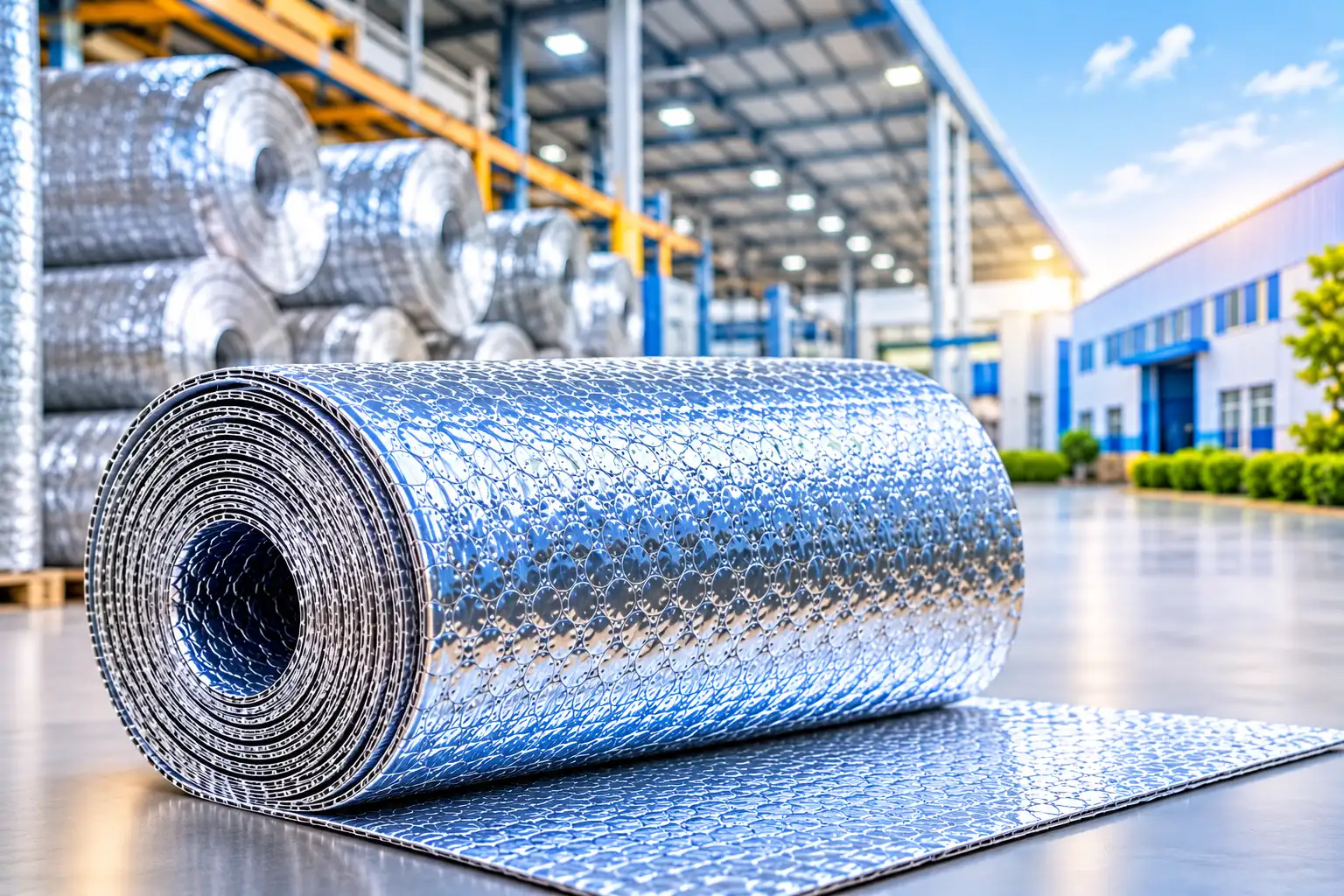
Reflective insulation roll in modern warehouse
Aluminium insulation Faq warehouse banner
shape
Frequently Asked Questions About Aluminium Foil Insulation

The R-value measures a material's resistance to heat flow. Double bubble insulation does not have one universal R-value because its performance depends on the product's construction, thickness, testing method, and installation conditions. Check the manufacturer's tested specifications for the exact product.

Not necessarily. The thickness of the complete insulation sheet, the foil facing, and the core material are different factors. Thermal performance also depends on air gaps and installation quality. Compare tested performance rather than choosing a product based only on thickness.

Yes. Purpose-made aluminium foil insulation products can be installed beneath suitable roof systems to help reduce radiant heat transfer. Follow the manufacturer's installation instructions and provide the required air gap where specified. Ordinary kitchen foil is not a substitute for a purpose-designed building insulation system.

Composite aluminium foil insulation combines a reflective foil layer with a core such as polyethylene air bubbles, foam, or another suitable substrate. The construction varies by product, so buyers should check the material specifications and thermal-performance data before purchasing.

Aluminium foil insulation material is used in suitable roof, ceiling, and other building systems to help manage radiant heat transfer. Common applications include metal-roofed sheds, factories, warehouses, workshops, and selected residential and commercial buildings.

Its potential advantages include reducing radiant heat transfer, supporting indoor comfort, lightweight handling, availability in different constructions, potentially reducing cooling requirements, and suitability for various building applications. Actual results depend on the product and installation.

An aluminium bubble foil insulation sheet combines a reflective foil facing with an air-bubble core. The foil surface helps reduce radiant heat transfer under suitable installation conditions, while the bubble layer contributes to the product's construction and thermal resistance.

You can compare insulation manufacturers, exporters, and traders that serve your location or project market. Look for transparent specifications, relevant technical documentation, consistent product quality, and dependable supply arrangements. Confirm that the supplier can provide the exact product required for your application.

The right product depends on the roof structure, heat exposure, available installation space, and required thermal performance. Compare single-bubble, double-bubble, and other suitable composite products using verified specifications and the manufacturer's installation guidance.

It may help reduce cooling demand when it limits heat entering the building, but savings are not guaranteed. The outcome depends on climate, roof construction, insulation performance, ventilation, occupancy, and air-conditioning efficiency.

Conclusion

Choosing the right aluminium foil insulation sheet involves understanding how reflective insulation works, comparing different product constructions, and considering the needs of your roof or building.

Double-bubble insulation, aluminium bubble foil insulation sheets, and other composite products can help manage radiant heat when correctly selected and installed. However, thickness alone does not determine performance, and the R-value should always be checked against reliable product data.

For residential, commercial, and industrial projects, focus on material composition, tested thermal performance, installation requirements, and long-term suitability. By comparing these factors and speaking with a knowledgeable supplier such as KANPACK Insulation, you can make a more informed decision about the insulation material that best fits your project.


Contact Now
Reflective insulation and sustainable home